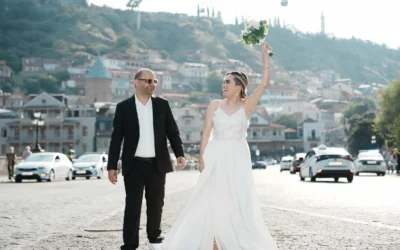

If you are wondering how to pose for wedding photos without looking stiff or uncomfortable, here is the most important thing to remember: you do not need to become a model before your wedding day.
The best wedding photographs rarely come from holding a complicated pose or forcing a perfect smile. They come from good light, comfortable body language, genuine interaction and a photographer who knows how to guide you.
At Artmakers Studio, we combine gentle posing direction with candid wedding photography and videography. We help couples feel comfortable in front of the camera while leaving space for real emotions to unfold naturally.
This guide explains how to stand, move, use your hands and connect with your partner so your wedding photos look elegant, flattering and authentically yours.
How to Look Natural in Wedding Photos
Natural does not mean completely unposed. Even relaxed-looking wedding portraits usually begin with a small amount of direction.
Your photographer may adjust where you stand, turn your shoulders toward the best light or suggest a simple movement. Once the foundation is right, the pose becomes less important than the connection between you.
The goal is not to perform for the camera. It is to give you something comfortable to do while the photographer captures what happens between you.
Focus on Your Partner, Not the Camera
Looking directly into the lens can make some people self-conscious. When that happens, shift your attention to your partner.
Look into each other’s eyes. Whisper something funny. Talk about a favorite memory. Tell your partner what you are most excited about. These small interactions create natural smiles and expressions that cannot be manufactured on command.
Not every photograph requires both people to look at the camera. Some of the most emotional wedding pictures happen when the couple appears to forget that the photographer is there.
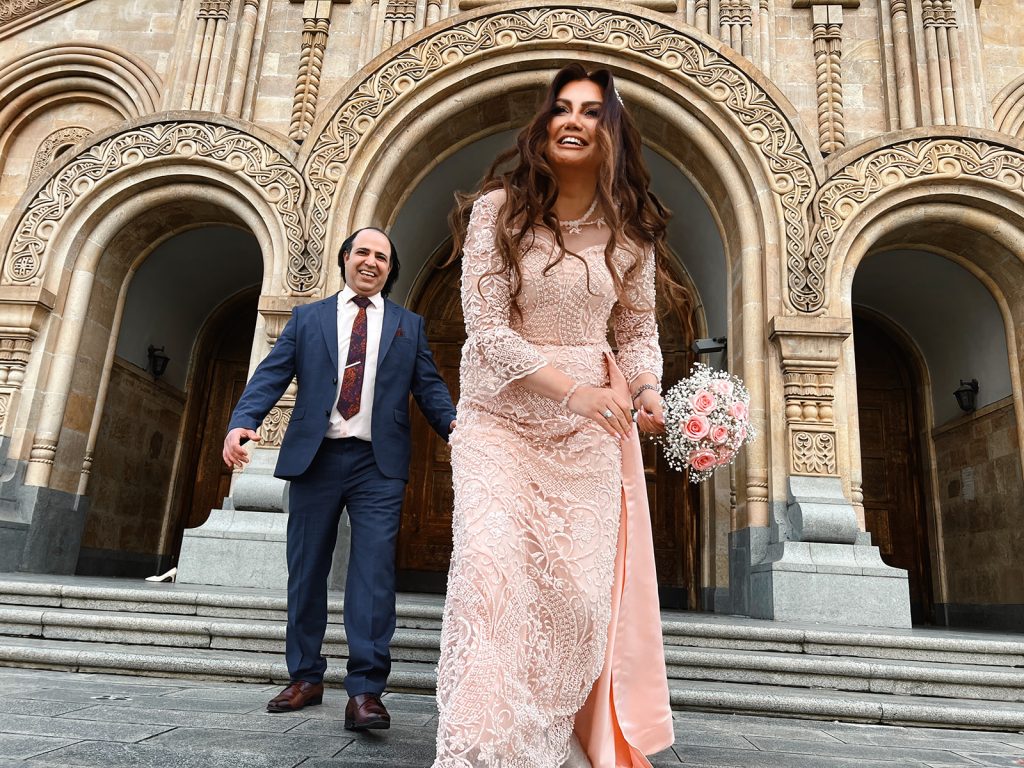
Relax Your Shoulders and Hands
ension often appears first in the shoulders, jaw and hands. Before each portrait, take a slow breath, lower your shoulders and loosen your fingers.
Avoid squeezing your partner’s hand, clenching your fists or pressing your arms tightly against your body. Hands should rest lightly rather than grip.
If you are unsure what to do with your hands, try one of these options:
- Hold your partner’s hand loosely.
- Rest one hand gently on your partner’s chest, arm or waist.
- Hold your bouquet slightly below your waist.
- Adjust a jacket, cufflink, veil or piece of jewelry.
- Place one hand in a pocket while keeping the thumb visible.
- Lightly touch your partner’s face or hair.
Small, purposeful hand movements usually look more natural than trying to keep both hands perfectly still.
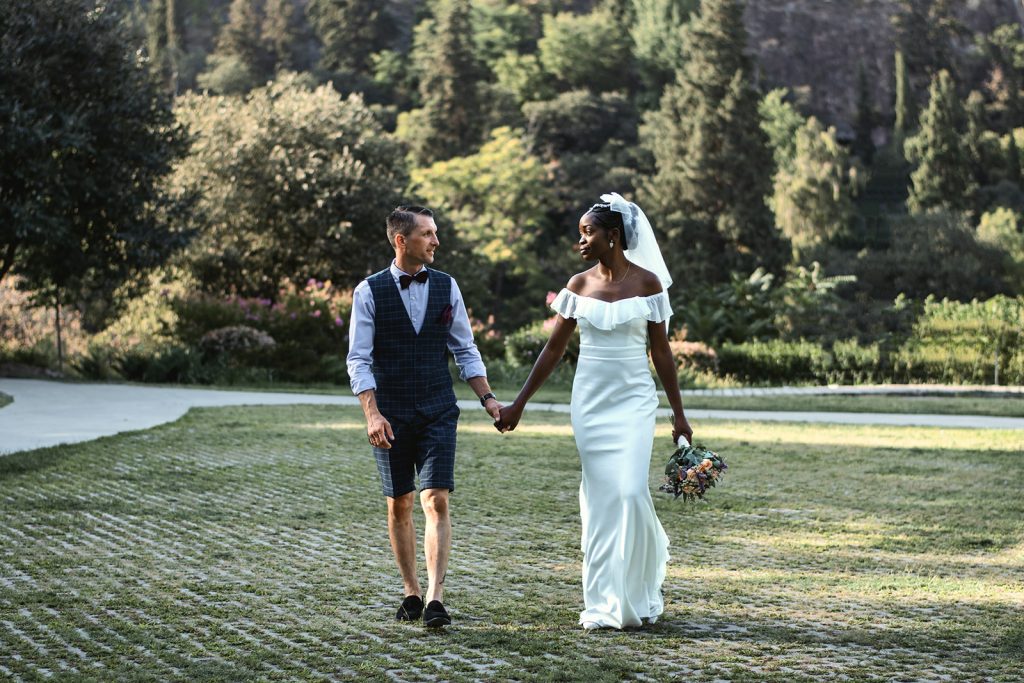
Turn Slightly Instead of Facing the Camera Straight On
Standing completely square to the camera can sometimes look rigid. A slight turn creates more shape and makes the pose feel less formal.
Angle your body gently while keeping your face directed toward your partner or the photographer. Put a little more weight on the leg farther from the camera and keep your posture tall without becoming stiff.
Your photographer should refine the angle according to your clothing, height difference, body language and the direction of the light.
12 Natural Wedding Photo Poses That Work
You do not need to memorize a long list of wedding photography poses. A few simple positions can create dozens of different photographs when the photographer changes the angle, distance, composition and movement.
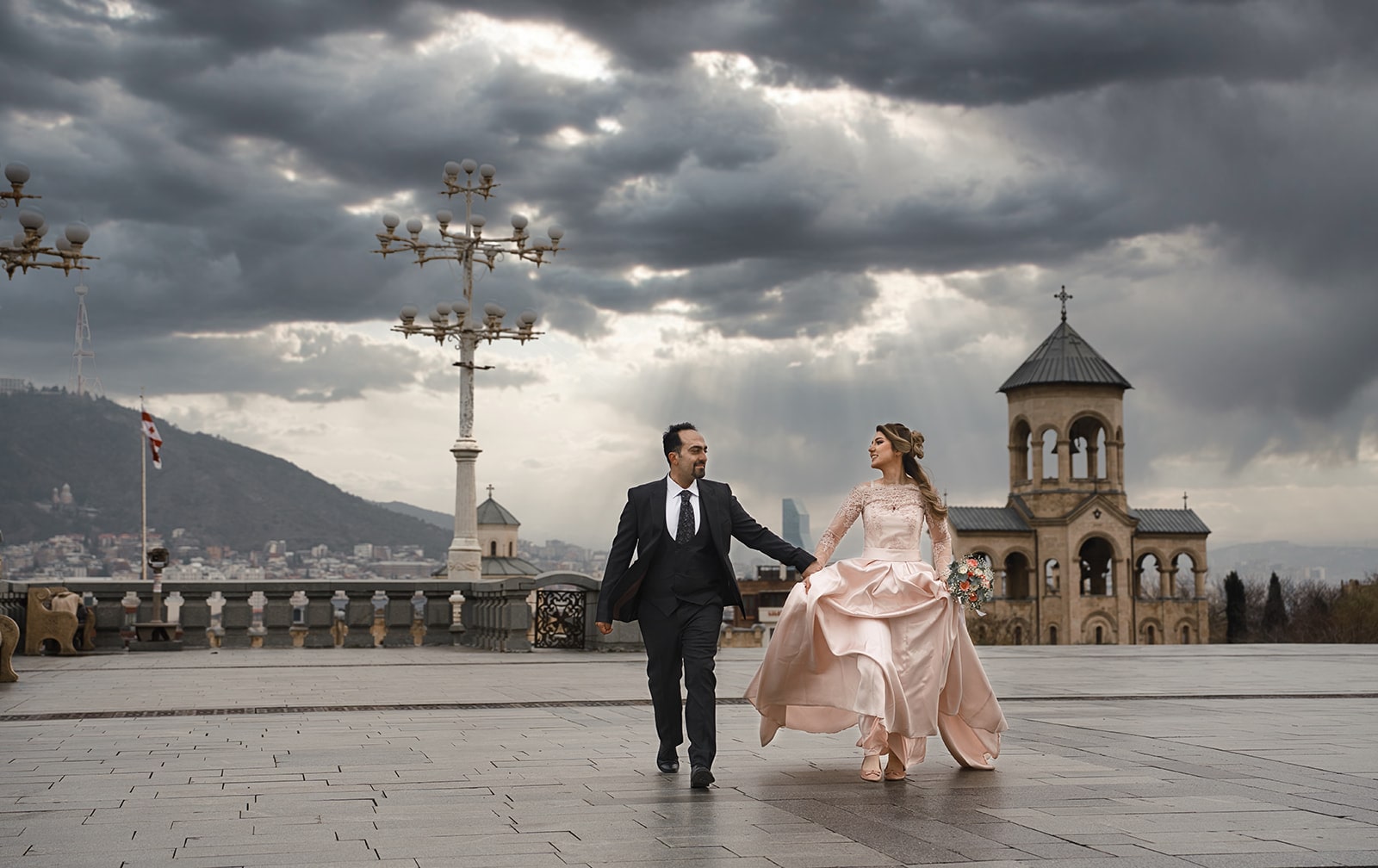
1. Walk Hand in Hand
Walking is one of the easiest ways to stop thinking about posing.
Hold hands and walk slowly together. Look at each other, talk or occasionally glance toward the camera. Keep your steps shorter than usual so the movement stays controlled.
This pose creates natural body language and works especially well in scenic locations such as Old Tbilisi, Rike Park or a quiet path near Turtle Lake.
2. Stand Close and Touch Foreheads
Face each other and move close enough for your foreheads or temples to touch. Relax your shoulders and keep your hands connected at the waist, arms or face.
You can close your eyes, smile softly or whisper to one another. This creates an intimate wedding portrait without requiring an exaggerated expression.
3. Use a Close Embrace
Stand chest to chest or have one partner wrap their arms around the other from behind. Keep the embrace gentle and leave enough space around your neck and shoulders to maintain good posture.
A close embrace can produce several photographs in seconds: looking at the camera, looking at each other, closing your eyes or sharing a quiet laugh.
4. Walk Away and Look Back
Walk away from the photographer while holding hands. After a few steps, one or both of you can look back over your shoulder.
This pose shows the back of a wedding dress, veil or suit while creating a sense of movement and place. It works beautifully in wide environmental portraits where the architecture or landscape is part of the story.
5. Try a Slow Dance
You do not need music or a dance floor. Hold each other and sway slowly.
A simple turn, spin or gentle dip gives the photographer and videographer several natural moments to capture. Keep the movement comfortable rather than trying to create a dramatic pose that feels unfamiliar.
This is particularly effective for couples who feel awkward standing still.
6. Capture the Almost-Kiss
Move close as though you are about to kiss, then pause for a moment. Look at each other’s lips or close your eyes.
The moment immediately before a kiss often carries more emotion than the kiss itself. Your photographer can then capture the kiss and the reaction afterward, creating a complete sequence.
7. Sit Together
Sitting poses help minimize visible height differences and give both partners a natural place for their hands.
Sit close rather than leaving a large gap between you. Turn slightly toward each other, keep your posture relaxed and interact normally. One partner can lean gently against the other’s shoulder or chest.
Steps, benches and low stone walls can all work, provided the location and wedding clothing make the pose safe and comfortable.
8. Let the Veil or Dress Create Movement
A veil, dress train or flowing fabric can add shape and motion to wedding photographs.
Walk slowly, turn gently or allow your photographer’s assistant to lift the veil into a light breeze. The movement should complement the couple rather than cover faces or become the entire focus of the photograph.
A professional photographer will also make sure the fabric falls cleanly before capturing formal full-length portraits.
9. Photograph Each Partner Individually
Couple portraits are important, but each partner should also have individual wedding photographs.
Useful individual poses include:
- Looking toward a window or scenic view
- Adjusting a jacket, veil, earring or cufflink
- Holding the bouquet naturally
- Walking toward the camera
- Looking back over one shoulder
- Standing quietly in a flattering pool of light
These images provide variety and preserve details that may otherwise be missed during a busy wedding day.
10. Include Hands, Rings and Small Details
Not every wedding photograph needs to show your faces. Close-up images of intertwined hands, wedding rings, flowers and clothing details help tell the complete story.
Keep your fingers relaxed and avoid pressing your hands flat against each other. Place the ring hand where it can be seen naturally—on your partner’s arm, chest or shoulder, for example.
11. Create Natural Group and Family Photos
Family photographs often need more structure because several people must look good at the same time.
Stand close enough to appear connected, turn bodies slightly inward and avoid creating large gaps between people. Place the couple in the center and arrange family members around them.
Prepare a short list of essential family combinations before the wedding. This saves time and helps ensure that important relatives are not missed.
12. Finish With a Wide, Cinematic Portrait
A wide photograph places the couple within the surrounding landscape or architecture. These images are especially powerful when getting married or having a wedding photoshoot in Georgia.
Tbilisi offers a distinctive combination of historic streets, balconies, churches, river views, parks and modern architecture. In a wide portrait, your pose can be very simple because the location and composition create the drama.
Stand close, hold hands, embrace or walk together while the photographer uses the environment to frame the scene.
How to Pose When You Feel Awkward in Front of the Camera
Many couples tell us that they are not photogenic or do not know how to pose. This is completely normal.
Feeling comfortable usually takes a few minutes. Begin with movement rather than a formal portrait. Walk, talk and allow yourself to become familiar with the camera before attempting more structured poses.
It also helps to tell your photographer what makes you uncomfortable. If you dislike a particular angle, prefer minimal posing or feel nervous about a specific feature, discuss it before the wedding. Clear communication allows your photographer to direct you with greater confidence and sensitivity.
Do not try to copy every photograph from Pinterest or Instagram exactly. Use inspiration to communicate the mood you like, but allow your photographer to adapt each idea to your relationship, clothing, location and available light.
Common Wedding Posing Mistakes to Avoid
Forcing Every Smile
A constant, exaggerated smile can quickly look unnatural. Your gallery should include laughter, quiet expressions, eye contact and emotional moments—not one repeated expression.
Leaving Too Much Space Between You
Unless the pose intentionally uses negative space, large gaps can make a couple appear disconnected. Move closer than you normally would for a casual photograph.
Pressing Arms Against the Body
Keeping an arm pressed firmly against your side can make the pose look tense. Create a small amount of space and keep the arm relaxed.
Holding the Bouquet Too High
A bouquet held near the chest can cover the dress and make the shoulders tense. In most full-length portraits, holding it around the waist or slightly below produces a cleaner result.
Looking at Different Cameras
When a photography and videography team is working together, follow the direction of the person leading that moment. Looking between several cameras can make the final images feel unfocused.
A coordinated team will communicate clearly so you know where to look and when to move.
Trying to Control Every Photograph
Planning is useful, but wedding days are unpredictable. Weather, light, traffic and timing can all affect the portrait session. Trust your photographer to adjust the plan and identify opportunities as they appear.
Posing for Wedding Photography and Videography
Photography and videography capture movement differently.
A photographer may ask you to pause briefly when the light, expression and composition align. A videographer usually needs the movement to continue so the final film feels fluid.
For wedding video, think in actions rather than poses:
- Walk slowly together.
- Turn toward each other.
- Adjust the veil or dress.
- Share a quiet conversation.
- Dance, sway or spin.
- Hold an embrace for a few seconds.
- Walk into a scene and then out of it naturally.
These actions give your wedding videographer enough material to build a cinematic sequence while also creating opportunities for candid photographs.
Choosing one coordinated team for wedding photography and videography in Tbilisi, Georgia can make this process easier because the photographer and videographer can plan their directions around each other.
Wedding Posing Tips for Tbilisi and Georgia
The location should influence how you move and pose.
Old Tbilisi’s cobblestone streets and historic architecture work beautifully for walking photographs and environmental portraits. Sameba Cathedral offers grand architectural backgrounds, while Turtle Lake can provide a softer natural setting. Each location presents different light, walking conditions and travel requirements.
Bring comfortable shoes for moving between locations, especially if your wedding attire is difficult to walk in. You can change into formal footwear before the photographs.
Also consider the time needed to travel between locations. Spending too much of your photography package in traffic reduces the time available for relaxed portraits. It is usually better to choose a small number of complementary locations and photograph them well.
For inspiration, explore our guide to the best locations for wedding photography in Tbilisi, Georgia.
Should You Practise Wedding Poses Before the Wedding?
You do not need to rehearse an entire posing routine. However, practising a few basics can improve your confidence:
- Find a comfortable standing position together.
- Practise walking slowly while holding hands.
- Notice which side each of you naturally prefers.
- Try a relaxed embrace and forehead touch.
- Learn how to hold the bouquet without raising your shoulders.
- Discuss any poses or angles you strongly like or dislike.
An engagement or pre-wedding photoshoot can also help. It gives you experience working with your photographer and makes the camera feel much less intimidating on the wedding day.
Frequently Asked Questions About Wedding Photo Poses
How should couples pose for wedding photos?
Start close together with relaxed shoulders and soft hands. Turn slightly toward each other, shift your attention away from the camera and interact naturally. Simple movements such as walking, embracing or slow dancing usually create more authentic photographs than rigid poses.
How can we look natural in wedding pictures?
Focus on your partner rather than on how you look. Breathe, move slowly and follow simple directions from your photographer. Natural expressions appear more easily when you are talking, laughing or sharing a real moment.
What should we do with our hands in wedding photos?
Hold hands loosely, rest a hand on your partner’s arm or waist, hold the bouquet below the waist, or gently adjust an item of clothing. Keep fingers relaxed and avoid clenching or pressing your arms tightly against your body.
What are the best wedding poses for couples?
Reliable options include walking hand in hand, touching foreheads, embracing, slow dancing, sitting together, looking back while walking away and sharing an almost-kiss. The best pose is ultimately one that feels comfortable and reflects your relationship.
Will our wedding photographer tell us how to pose?
A professional wedding photographer should guide your posture, hands, positioning and movement when direction is needed. They should also know when to step back and capture genuine candid moments.
What if there is a significant height difference between us?
Height differences can be balanced with seated poses, steps, changes in camera angle and close embraces. Your photographer can choose positions that feel natural without trying to hide what makes you distinctive as a couple.
Can we request particular wedding poses?
Yes. Share a short collection of reference photographs before the wedding and explain what you like about them—the emotion, composition, lighting or pose. Your photographer can then adapt those ideas to your wedding rather than trying to reproduce someone else’s image exactly.
Beautiful Wedding Photos Begin With Trust
Learning how to pose for wedding photos can make you feel more prepared, but you should not spend your wedding day worrying about every angle.
Your photographer’s responsibility is to find good light, create flattering compositions and give you clear direction. Your responsibility is simply to stay connected with your partner and experience the day.
At Artmakers Studio, our approach combines thoughtfully directed portraits with candid photography and cinematic wedding videography. We help couples feel comfortable while capturing the atmosphere, emotion and distinctive beauty of their celebration.
If you are planning a wedding, civil ceremony, engagement or pre-wedding photoshoot in Tbilisi or elsewhere in Georgia, explore our wedding photography and videography packages and contact Artmakers Studio for a personalized consultation.